Best Email Marketing Software for Startups

The best email marketing software for startups is affordable, quick to set up and reliable in the inbox. Mailjet covers marketing and transactional email in one account, on EU based, ISO 27001 certified infrastructure. Pricing scales with the emails you send rather than the contacts you store, and you start free with 6,000 emails per month and no credit card.

Email marketing for startups

Whether you are still bootstrapping, chasing product market fit or scaling after a seed round, one Mailjet account covers both sides of your sending. Marketers build campaigns in a drag and drop editor while developers ship password resets, receipts and onboarding notifications through the same API. You keep unified logs, shared templates and one set of analytics instead of paying two vendors and splitting your sender reputation. All data sits in EU data centres, which answers the data protection question before your own customers ask it.
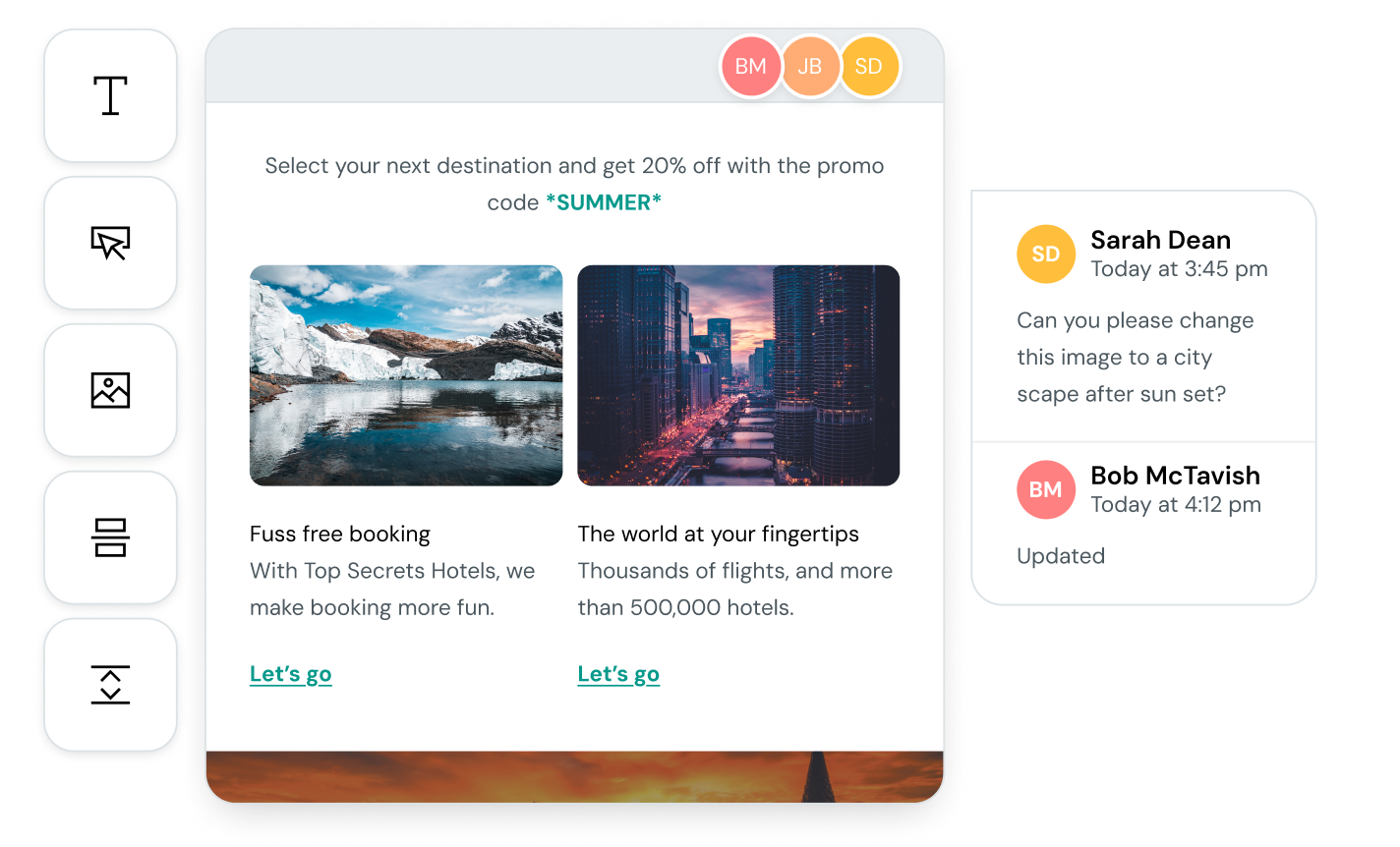
Mailjet's email editor and collaboration feature enable an agile design process.

How to choose your email software?

Judge a tool on seven things: a usable free tier, predictable pricing, speed to first send, deliverability controls, marketing and transactional email in one platform, compliance by default, and team collaboration.

Pricing model matters most: Contact based billing charges for every address you store, even subscribers who never open anything. Mailjet bills on emails sent, with unlimited contacts from the Essential plan upwards. Setup needs no credit card, and the send API or SMTP relay is included from the free plan. Deliverability rests on 99.9 percent uptime, Certified Senders Alliance membership since 2014, and automatic removal of spam complainants. If you run on deep ecommerce attribution and predictive segmentation, a specialist platform may suit you better. If you need sales pipelines, you need a CRM.

How do tech teams integrate the API and SMTP relay?

Tech teams send transactional email from their own product within minutes using the send API or the SMTP relay, both included on the free plan. Official libraries cover PHP, Ruby, Python, C#, Java and Node.js.

Signup confirmations, password resets, trial expiry reminders and order receipts go through the API, while campaigns leave the same account through the editor. Subaccounts separate the two streams, so a weak launch newsletter never damages the reputation behind your password resets. Event webhooks push delivery, open and click data into your own dashboards, and MJML, Mailjet’s open source markup framework, compiles simple markup into responsive HTML.

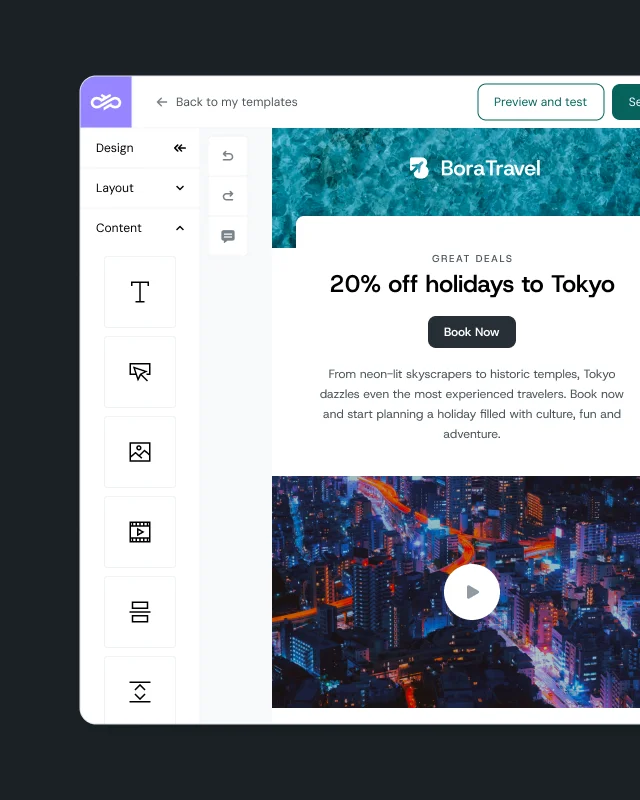
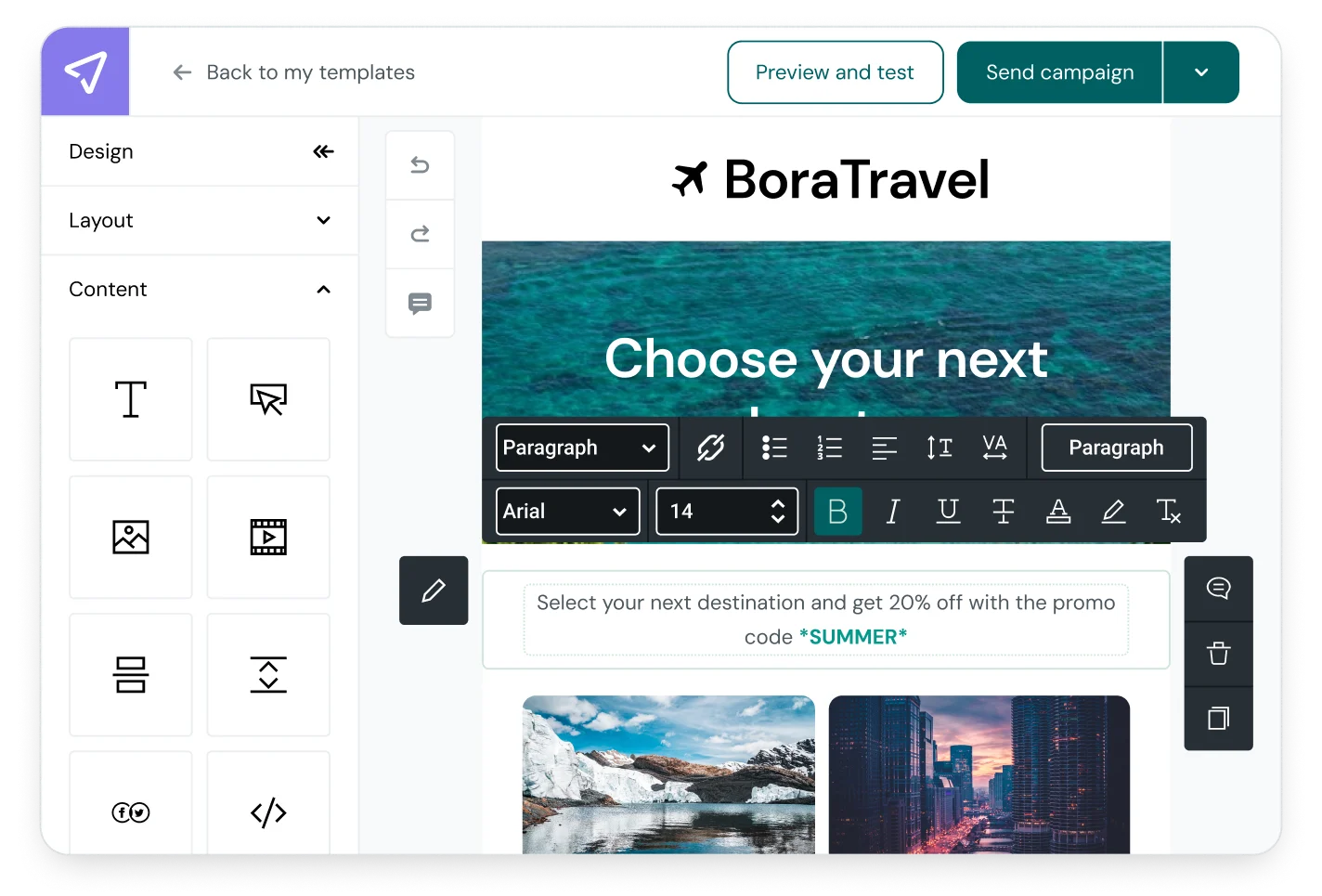
Options from Mailjet's email editor for creating tailored emails that fit your needs.

How does your team collaborate on a campaign?

Several people can edit one email at once, which removes version control from the process entirely.

You start from a template, drag in content blocks, and comment directly on the section you want changed. Locked sections protect your logo, footer and legal text, and role based permissions decide who can send. You also get segmentation, no code automation workflows for welcome sequences, A/B testing across up to ten versions, and real time reporting. Automations, landing pages and advanced statistics sit on the Premium plan.

Dynamic sections allow even more personalization.

What will email marketing cost as you grow?

Mailjet starts free and scales with the volume you send rather than the contacts you store, so your bill follows your sending, not your list size.

See pricing

Mailjet plan
Indicative list price per month
Monthly emails
Contacts
Notable inclusions
Free
$0
6,000, capped at 200 per day
1,000
API, SMTP relay, webhooks, editor, form builder
Starter
from $9
from 8,000, no daily cap
2,000
Brand kit, online support, 1 subaccount
Essential
from $19
from 15,000
Unlimited
Segmentation, AI assisted content, no Mailjet logo, 500 validations
Premium
from $29
from 15,000
Unlimited
Automations, landing pages, advanced statistics, team management, priority support
Custom
Quote
High volume
Unlimited
Dedicated technical account manager, dedicated IP strategy, deliverability reports

Why do startups switch to Mailjet?

Startups switch because Mailjet combines European hosting with developer tooling, real team collaboration and pricing that does not penalise a growing list. More than 100,000 companies use the platform.

Feature
Mailjet
Data location and compliance
EU data centres, ISO 27001, SOC 2, AFAQ GDPR
Pricing basis
Emails sent, unlimited contacts from Essential
API and SMTP
Send API, SMTP relay, webhooks, MJML
Team collaboration
Real time co editing, comments, role based permissions, locked sections
Free plan
6,000 emails per month, API included

Ready to send your first campaign?

You can go from signup to first send in a working day.

Create a free account, authenticate your sending domain, import contacts or connect your shop or CRM, build a double opt in form, edit a template, send a test, then send to your most engaged segment first. Moving from another provider? Import contacts with consent status intact, add Mailjet to your SPF record while the old provider still sends, then migrate campaigns before transactional traffic. Keep the old account open for one billing cycle so you retain historical reporting.

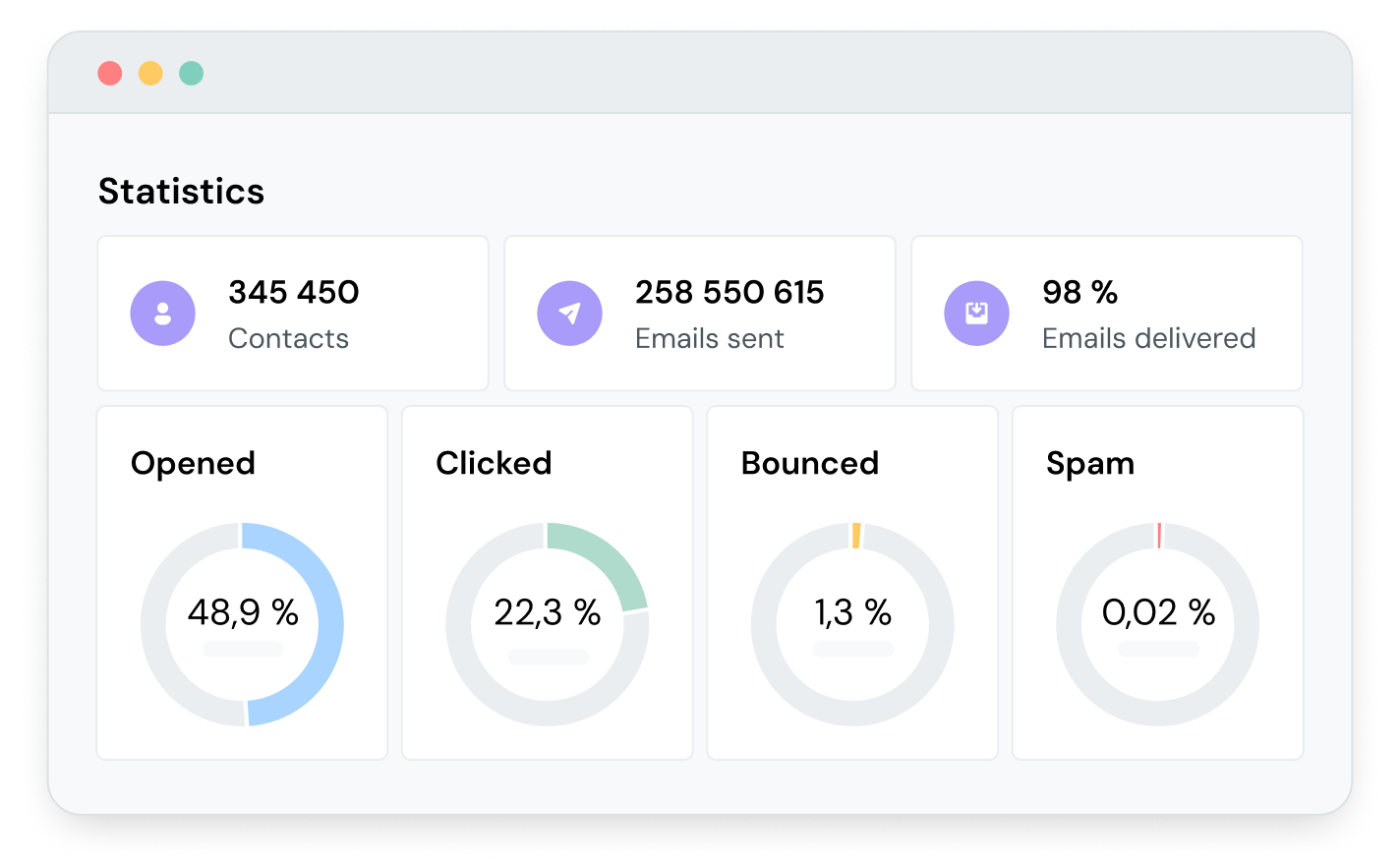
Mailjet statistics that enable continuous improvement.

Frequently asked questions about email marketing software for startups

Only while you are testing the platform or sending to a very small list. The free plan gives you 6,000 emails a month, capped at 200 a day, with 1,000 contacts and full API access. That cap stings fast: a launch email to 500 subscribers takes three days to go out. Essential at $19 removes it and adds unlimited contacts and segmentation.

Usually not at the start. A shared IP benefits from established reputation, while a new dedicated IP begins at zero and needs steady volume to build trust. A dedicated IP is available from the 100k plan on request.

Yes. Campaigns, imports, segmentation, forms, automations and reporting are all no code. A developer is only needed to add DNS records at setup and to integrate the API if you send transactional email.

You keep sending, and extra emails are billed per additional 1,000. Unused credits do not carry over, so pick the plan that matches a typical month rather than your busiest one.

Both. B2C teams use segmentation, automation and commerce integrations, while B2B teams rely on the API, subaccounts and EU data residency during procurement. GDPR makes no B2B exception, so consent obligations apply either way.